
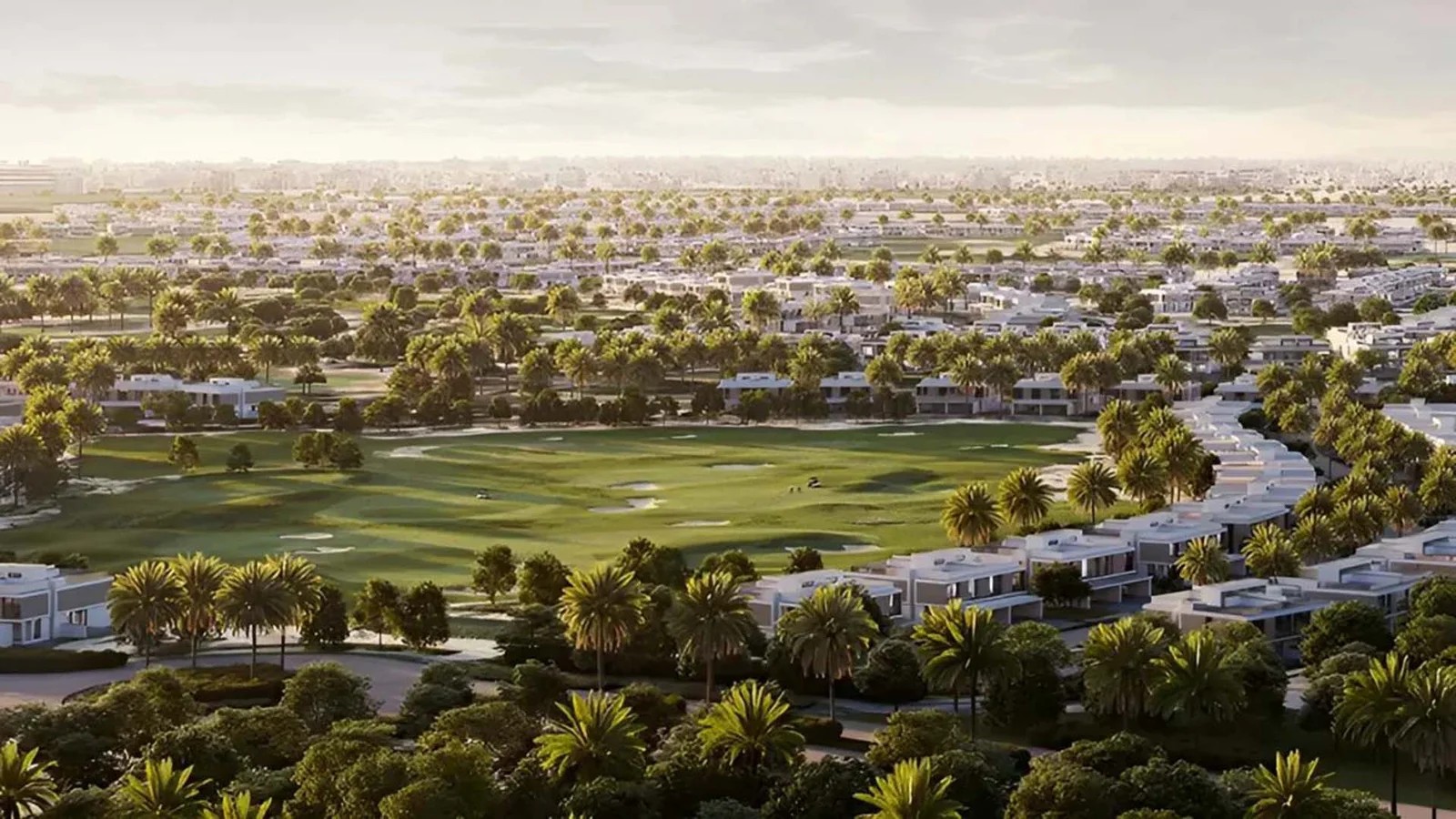
Mohamed Alabbar — the founder of Emaar Properties and the man behind Downtown Dubai, Burj Khalifa, and Dubai Mall — has announced an AED 200 billion (roughly USD 55 billion) master development. The number alone places the project among the largest single real estate announcements in the region's history, comparable in headline scale to landmark UAE megaprojects like Saadiyat Island in Abu Dhabi or the original Downtown Dubai masterplan two decades ago.
For context, AED 200 billion is more than triple Emaar's total backlog as recently reported, and represents a multi-decade build-out rather than a single-phase launch. For buyers, investors, and brokers watching Dubai's market, the announcement matters less for what's being launched next quarter and more for what it signals about long-term capital, demand, and the direction of Dubai's urban expansion.
What has actually been announced
Alabbar's announcement frames the AED 200 billion figure as the total gross development value (GDV) of a master-planned destination — meaning the projected value of all real estate, retail, hospitality and mixed-use components once fully built and sold over the project's lifecycle. It is not an upfront capital outlay. Master developments of this scale in Dubai typically roll out across 15 to 25 years, with infrastructure first, then sequential residential and commercial phases.
Components flagged in early communications include large-scale residential districts, branded residences, a waterfront or anchor leisure attraction, retail, schools, healthcare and a hospitality cluster. The exact location, masterplan release and sales launch dates will be confirmed by the developer in subsequent announcements — and prospective buyers should rely on official RERA-registered project numbers before committing funds.
GDV vs investment
AED 200 billion is the gross development value across the project's lifetime — not the cash being spent today. Expect the project to be delivered in phases, with each phase requiring its own RERA escrow account under Law No. 8 of 2007.
Why this matters for Dubai's market
Dubai recorded over AED 760 billion in real estate transactions in 2024, according to Dubai Land Department data, and 2025 has continued the upward trend. A single AED 200 billion masterplan represents roughly 25 percent of an entire record year of transactions — concentrated under one developer's vision. The signal to global capital is that Dubai's growth story is not slowing; it's expanding into new districts.
Historically, Alabbar-led master developments have lifted values across adjacent communities. When Downtown Dubai launched in the mid-2000s, surrounding areas like Business Bay and DIFC saw secondary price appreciation. Buyers in nearby freehold zones should watch the announced location closely — early movers in adjacent communities have historically captured the strongest capital growth.
What off-plan buyers should expect
If history is a guide, the first launches within the masterplan will be priced at a premium to surrounding inventory but below the eventual stabilised value. Payment plans on Alabbar-led launches have typically been 10 percent on booking, a structured construction-linked schedule, and 20–40 percent on handover. Expect strong demand on phase-one launches, with allocations going first to private clients, then brokers, then walk-in buyers.
| Cost item | Typical amount | Notes |
|---|---|---|
| DLD registration fee | 4% of purchase price | Paid on Oqood registration for off-plan |
| Oqood fee | AED 3,000 | Initial off-plan registration |
| Booking deposit | 5–10% | Required to secure unit |
| Admin / trustee fee | AED 1,050–4,200 | Varies by developer |
How to evaluate a launch of this scale
- Confirm the project is registered with RERA and has an escrow account number under Law No. 8 of 2007 before transferring any funds.
- Read the Sale and Purchase Agreement (SPA) carefully — focus on delay penalties, specification changes, and handover definitions.
- Verify the developer's track record on prior phases — handover delays of 6–18 months are common even on flagship projects.
- Model your total cost: purchase price + 4% DLD + Oqood + service charges (typically AED 15–25 per sqft for premium product).
- Check Golden Visa eligibility — properties AED 2 million and above qualify the buyer for a 10-year residence visa, including off-plan with proof of payment.
What this could mean for resale and rental markets
A masterplan of this scale brings significant new supply into the pipeline over a decade-plus horizon. In the short term — the next 24 to 36 months — supply impact is minimal because nothing is delivered yet, but demand and pricing in adjacent existing communities typically rise on the announcement effect alone. In the medium term, as phases hand over, secondary market dynamics depend heavily on absorption speed and the broader Dubai population growth trajectory.
Dubai's population is projected to grow from roughly 3.8 million today toward 5.8 million by 2040 under the Dubai 2040 Urban Master Plan. Projects of this scale are designed to absorb that growth. Rental yields in Alabbar-developed communities have historically held between 5 and 7 percent gross, with branded residences and waterfront product at the lower end and townhouses or mid-market apartments at the upper end.
Position early, but verify
On launches of this scale, the strongest returns historically go to buyers in phase one and phase two — provided the masterplan delivers as promised. Insist on seeing RERA registration, escrow details, and the masterplan approval from Dubai Municipality before committing.
How MR HAUS can help
Major launches like this are typically allocated through a tiered broker network. As a Dubai-based brokerage with direct developer relationships, MR HAUS can secure unit allocations on phase-one releases, advise on payment plan structuring, and handle the full DLD and Oqood process. We also advise on Golden Visa eligibility and the documentation required for international buyers purchasing off-plan from outside the UAE.
Frequently asked questions
Is the AED 200 billion the cost of construction?
No. The AED 200 billion figure refers to gross development value (GDV) — the projected total sales value of all real estate within the masterplan over its full build-out, typically 15 to 25 years. Construction cost is a fraction of this number.
When can I buy a unit in the new masterplan?
The announcement is at the masterplan stage. Specific tower or villa launches with prices and payment plans will be released in phases. Sign up with a registered Dubai brokerage to receive priority access to phase-one allocations.
Will the project qualify buyers for the Golden Visa?
Any single property purchased at AED 2 million or above qualifies the owner for the 10-year UAE Golden Visa, including off-plan purchases. Documentation requires proof of payment and DLD title or Oqood registration.
Is the location freehold?
Dubai's master developments by major developers like Emaar are typically launched in designated freehold zones, allowing 100 percent foreign ownership. The specific freehold status will be confirmed in the official masterplan release and Dubai Land Department zoning.
How is my money protected on an off-plan purchase?
Under Dubai Law No. 8 of 2007, all off-plan payments must go into a RERA-supervised escrow account tied to the specific project. Funds are released to the developer only as construction milestones are verified. Never transfer money outside the escrow account.
Should I wait for resale or buy at launch?
On flagship Alabbar-led projects, phase-one launch prices have historically been below resale prices within 12 to 24 months of launch, driven by allocation scarcity. The trade-off is construction risk and a typical 3 to 5 year wait for handover. Decision depends on your investment horizon and liquidity.