
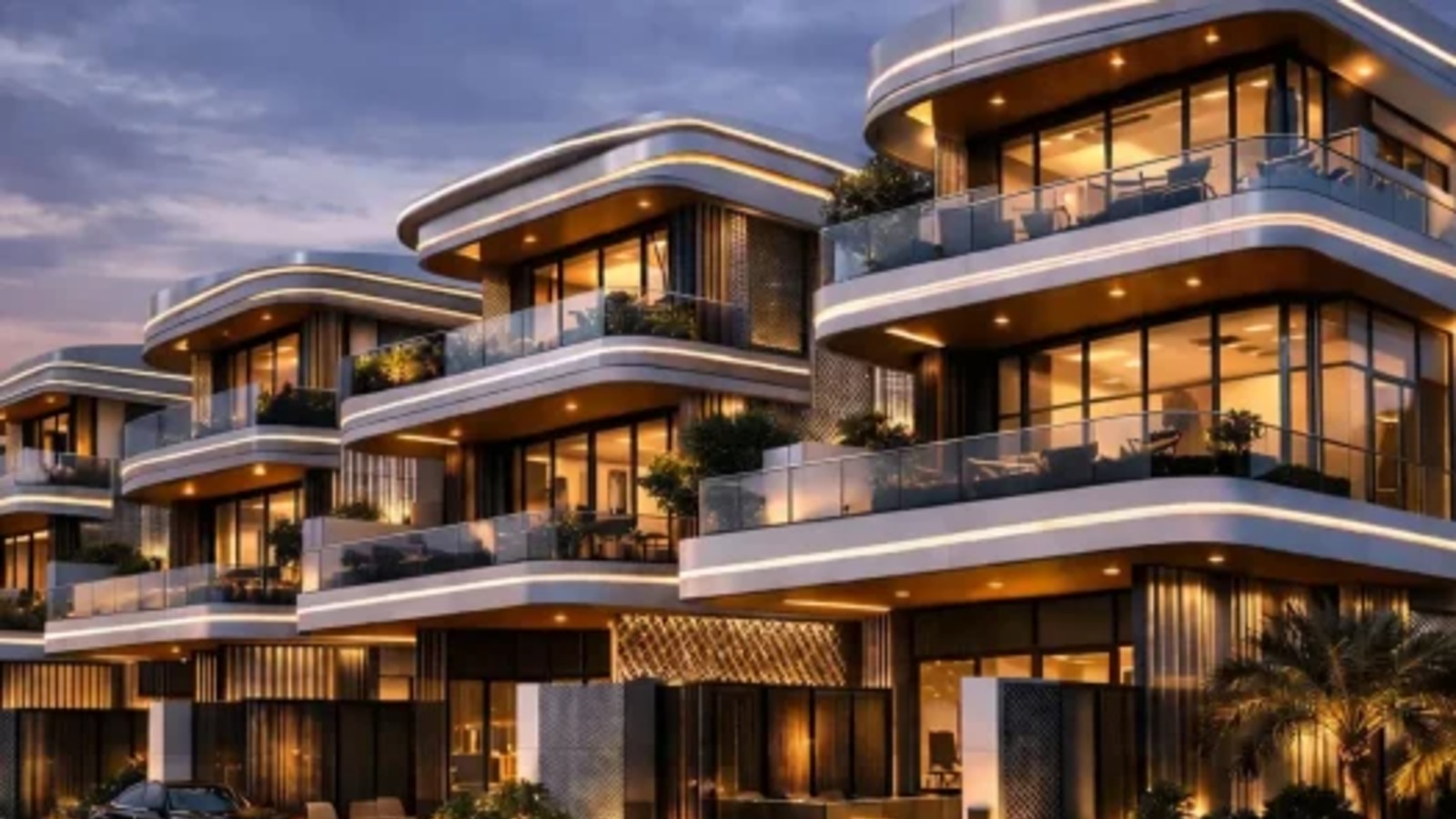
Walk through Palm Jumeirah, Emirates Hills, or the upper floors of a Downtown tower and you will pass dozens of homes that are quietly for sale but appear nowhere on Bayut, Property Finder, or Dubizzle. In Dubai's prime segments, a meaningful share of transactions, often estimated at 20 to 30 percent at the AED 15 million-plus level, never touches a public portal. These are off-market or 'pocket' listings, and they are usually only accessible through a well-connected broker.
For buyers, off-market inventory means less competition, fewer bidding wars, and access to trophy assets that owners prefer to sell discreetly. For sellers, it means privacy, controlled exposure, and qualified buyers only. But the entire system runs on agent relationships. This guide explains how Dubai agents actually source off-market homes, what RERA rules apply, and how you can position yourself to see deals before anyone else.
Why sellers go off-market in Dubai
Public listings are powerful but blunt. Once a property hits a portal, it carries a digital timestamp. If it sits unsold for 60 or 90 days, buyers assume something is wrong and begin lowballing. Wealthy owners, especially in Emirates Hills, District One, Palm Jumeirah Signature Villas, and Bulgari Residences, often refuse to risk that perception.
- Privacy: Many owners are public figures, family-office principals, or HNW individuals who do not want their interiors photographed online.
- Price testing: Sellers can quietly gauge appetite at an aspirational price before committing to a public asking price.
- Tenant occupancy: Properties leased under Ejari contracts cannot easily be shown for viewings, so owners prefer pre-vetted buyers only.
- Divorce, inheritance, or restructuring: Sensitive personal circumstances often require discreet sales.
- Avoiding stale-listing stigma: A home that quietly transacts in 90 days off-market looks better than one that sat publicly for 6 months.
How agents actually source off-market inventory
There is no MLS in Dubai. The closest equivalent is the DLD's Trakheesi system for permitting listings and the new Dubai Brokers app, but neither functions as a true shared off-market database. Off-market deal flow is therefore generated through human networks. A strong Dubai broker typically uses five overlapping channels.
- Direct owner relationships: Past clients who bought through the agent 3 to 7 years ago and are now ready to upgrade or exit.
- Building concierge and developer relationships: In branded residences like Bulgari, Atlantis The Royal Residences, or Six Senses, concierges often know who is quietly considering a sale.
- Broker-to-broker whisper networks: Senior agents at the top brokerages share pocket listings via WhatsApp groups, often with the listing agent retaining full commission control.
- Cold outreach to title holders: Agents identify target buildings, then write to owners directly offering a discreet valuation.
- Family offices, wealth managers, and lawyers: These advisors frequently flag clients who are restructuring portfolios and want a quiet exit.
Off-market does not mean unverified
A legitimate off-market home in Dubai still requires a signed Form A (seller-broker agreement) and a Trakheesi permit before any transaction proceeds. Walk away from any agent offering 'off-market' deals without producing a title deed and Form A at the offer stage.
What the buyer's side looks like
If you are buying, your agent's job is to be the first call when a pocket listing surfaces. That requires you to be a known, qualified, ready buyer in their mental rolodex. Agents will not waste a one-shot off-market opportunity on a tire-kicker.
To get on the inside track, work with one or two brokers exclusively rather than spreading your search across ten. Provide proof of funds upfront, a clear brief (community, bed count, budget range, must-haves, deal-breakers), and a realistic timeline. Sign a Form B buyer-broker agreement if asked. The more committed you appear, the more inventory you will see.
| Buyer profile | Off-market access likelihood |
|---|---|
| Browsing portals, no agent relationship | Very low |
| Working with 5+ agents, no proof of funds | Low |
| Exclusive with 1-2 agents, pre-approved or cash | High |
| Repeat client of a senior broker, clear brief | Very high |
Fees, commissions, and how the math works
Off-market does not change the cost structure of a Dubai purchase. You still pay the standard 4 percent DLD transfer fee, AED 580 title deed issuance, around AED 4,200 trustee office fee for properties over AED 500,000, and a 2 percent agent commission plus 5 percent VAT on that commission. The seller typically also pays 2 percent to their side, although on some pocket deals one agent represents both sides and the commission is negotiated.
The financial advantage of buying off-market is usually not a lower price, it is access. In a tight market like Dubai's prime segment in 2024 and 2025, simply being shown a Palm signature villa before five other buyers is worth more than a 2 to 3 percent discount.
Red flags to watch for
Common off-market scams
Be cautious of 'distressed seller' WhatsApp blasts, off-market listings with no Trakheesi permit, agents who refuse to name the building or share the title deed before a deposit, and any request to wire funds outside a DLD-registered trustee office. Genuine off-market deals still flow through the standard MOU (Form F) and NOC process.
Also be wary of agents who claim to have 'exclusive' access to entire buildings. RERA-registered brokers operate under individual Form A agreements per unit. A broker can have strong relationships in a tower, but no single agent owns a development's resale flow.
When off-market is the wrong strategy
Off-market makes sense for trophy assets and ultra-prime homes where privacy commands a premium. For most buyers in communities like JVC, Dubai Hills Estate, Arabian Ranches, or Town Square, the public portals already show 90 percent-plus of available inventory and competitive bidding actually helps sellers achieve the best price. If your budget is under AED 5 million, focus on a well-organised portal search with one good agent, and treat any off-market lead as a bonus rather than the strategy.
Frequently asked questions
Is it legal for agents to sell properties off-market in Dubai?
Yes, as long as a Form A is signed with the seller and a Trakheesi permit is issued before marketing begins. Off-market simply means the listing is not published on portals, not that it operates outside RERA rules.
Do I pay more for an off-market home?
Not directly. Commissions remain at the standard 2 percent plus 5 percent VAT, and DLD fees are unchanged. However, off-market prices often sit at the upper end of fair value because there is no public price discovery.
How do I prove I am a serious buyer to unlock off-market inventory?
Provide a recent bank statement or mortgage pre-approval letter from a UAE bank, give your agent an exclusive or semi-exclusive brief, and respond quickly to viewings. Senior brokers vet buyers before sharing pocket listings.
Can I find off-market homes without an agent?
It is very difficult. Off-market flow runs on broker relationships and broker WhatsApp networks. Direct owner outreach is possible but time-intensive and rarely produces results for individual buyers.
What percentage of Dubai's prime market trades off-market?
Industry estimates suggest 20 to 30 percent of transactions above AED 15 million happen off-market, rising to over 40 percent for ultra-prime trophy homes on Palm Jumeirah, Emirates Hills, and District One.
Does off-market mean I cannot get a mortgage?
No. Off-market homes are financed exactly like portal-listed ones. You will still need a bank valuation, NOC from the developer, and standard DLD registration through a trustee office.